
 Carmen J. Moore
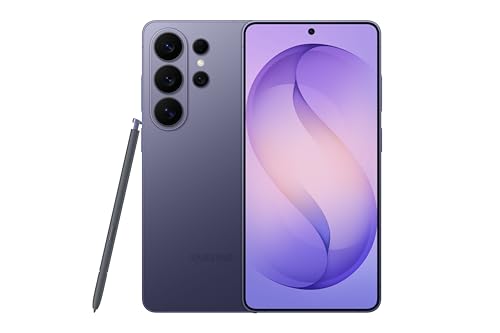
Smartphone cameras have revolutionized the way we capture moments in our daily lives. With advancements in technology, these tiny cameras have become powerful tools capable of producing stunning images and videos. One question that often arises is whether smartphone cameras can be classified as mirrorless cameras.
Mirrorless cameras are a type of digital camera that do not have a mirror mechanism like DSLR cameras. Instead, they use an electronic viewfinder or the camera’s LCD screen to preview the image. While smartphone cameras also lack a mirror mechanism, they are not typically referred to as mirrorless cameras in the traditional sense.
Smartphone cameras are designed for convenience and portability, with a focus on ease of use and connectivity. They are optimized for quick and effortless photography, offering features like auto-focus, image stabilization, and various shooting modes. While they may share some similarities with mirrorless cameras in terms of functionality, they serve a different purpose in the world of photography.

Comparison of Smartphone and Mirrorless Cameras
When comparing smartphone cameras to mirrorless cameras, there are several key differences to consider:
| Feature | Smartphone Camera | Mirrorless Camera |
|---|---|---|
| Image Quality | Smartphone cameras have smaller sensors and lenses, resulting in lower image quality compared to mirrorless cameras. | Mirrorless cameras have larger sensors and interchangeable lenses, allowing for higher image quality and better control over depth of field. |
| Size and Portability | Smartphone cameras are compact and easy to carry around due to their built-in design. | Mirrorless cameras are larger and heavier than smartphones, but still more portable than DSLR cameras. |
| Control and Customization | Smartphone cameras offer limited manual controls and customization options, mainly relying on automatic settings. | Mirrorless cameras provide extensive manual controls, customizable settings, and the ability to use different lenses for various shooting scenarios. |
| Performance in Low Light | Smartphone cameras struggle in low light conditions due to their small sensors and limited aperture capabilities. | Mirrorless cameras excel in low light situations, thanks to their larger sensors and ability to use fast lenses for better light capture. |
Advantages of mirrorless cameras
Mirrorless cameras offer several advantages over traditional DSLRs:
| 1. Size and weight: | Mirrorless cameras are usually smaller and lighter than DSLRs, making them more portable and easier to carry around. |
| 2. Electronic viewfinder: | Many mirrorless cameras come with an electronic viewfinder (EVF) that provides a real-time preview of the image, helping photographers to compose shots more accurately. |
| 3. Autofocus performance: | Mirrorless cameras often have faster and more accurate autofocus systems compared to DSLRs, especially in continuous autofocus mode. |
| 4. Silent shooting: | Due to the absence of a mirror mechanism, mirrorless cameras can shoot silently, which is beneficial for capturing candid moments without disturbing the subjects. |
| 5. Video capabilities: | Many mirrorless cameras excel in video recording with features like 4K resolution, high frame rates, and advanced video autofocus. |
Disadvantages of smartphone cameras
Despite their convenience and versatility, smartphone cameras have some limitations compared to traditional cameras. One major disadvantage is the smaller sensor size in smartphone cameras, which can result in lower image quality, especially in low-light conditions. Additionally, smartphone cameras often lack optical zoom capabilities, relying instead on digital zoom, which can lead to loss of image clarity. Another drawback is the limited manual control options available on smartphone cameras, making it challenging for photographers to adjust settings such as aperture and shutter speed. Finally, the small size of smartphone camera lenses can also impact the overall image quality and depth of field compared to larger lenses found in mirrorless or DSLR cameras.
Technological advancements in smartphone cameras
In recent years, smartphone cameras have undergone significant technological advancements, transforming them into powerful tools for capturing high-quality images and videos.
Multiple lenses and sensors
Smartphone manufacturers have started incorporating multiple lenses and sensors into their cameras, allowing users to capture photos with different perspectives, depths of field, and improved low-light performance.
AI-powered features
Artificial intelligence (AI) has also played a crucial role in enhancing smartphone camera capabilities. AI-powered features such as scene recognition, portrait mode, and automatic adjustments have made it easier for users to take stunning photos without the need for manual settings.
Overall, advancements in smartphone camera technology have made it possible for users to capture professional-quality photos and videos conveniently with just a device that fits in their pocket.
Future trends in camera technology
As technology continues to evolve, the future of camera technology is likely to see significant advancements. Some of the trends we can expect to see include:
1. Improved image quality: Cameras will continue to enhance their image quality with higher resolutions, better low-light performance, and improved dynamic range.
2. Artificial intelligence integration: AI will play a significant role in camera technology, helping to improve autofocus, image processing, and scene recognition.
3. Compact and lightweight designs: Cameras will become even more compact and lightweight, making them easier to carry and use for photography enthusiasts.
4. Enhanced connectivity: Cameras will offer improved connectivity options, allowing users to easily share and transfer images wirelessly to other devices.
5. Virtual and augmented reality: Cameras will likely incorporate features that cater to the growing demand for virtual and augmented reality content creation.
Overall, the future of camera technology looks promising, with innovations that will continue to push the boundaries of what is possible in photography.



I’ve found that even with smaller sensors, my smartphone takes decent pictures in good lighting. But it really struggles in low light situations compared to my mirrorless setup.
Good article! Can you clarify why smartphone cameras aren't considered mirrorless? Isn’t the lack of a mirror the main feature?
Great question! While both smartphone cameras and mirrorless cameras lack a mirror mechanism, mirrorless cameras generally offer larger sensors, interchangeable lenses, and more manual controls, which are key to their classification. Smartphones prioritize convenience and compact design.
I have to disagree with the idea that smartphone cameras offer lower image quality in all situations. Recent models have made huge strides and can compete in some cases, especially for casual photography. Yes, they might not replace a mirrorless camera for professional work, but for social media, they’re more than sufficient!